The Good, the Bad and the Ugly
Il Buono, Il Brutto, Il Cattivo
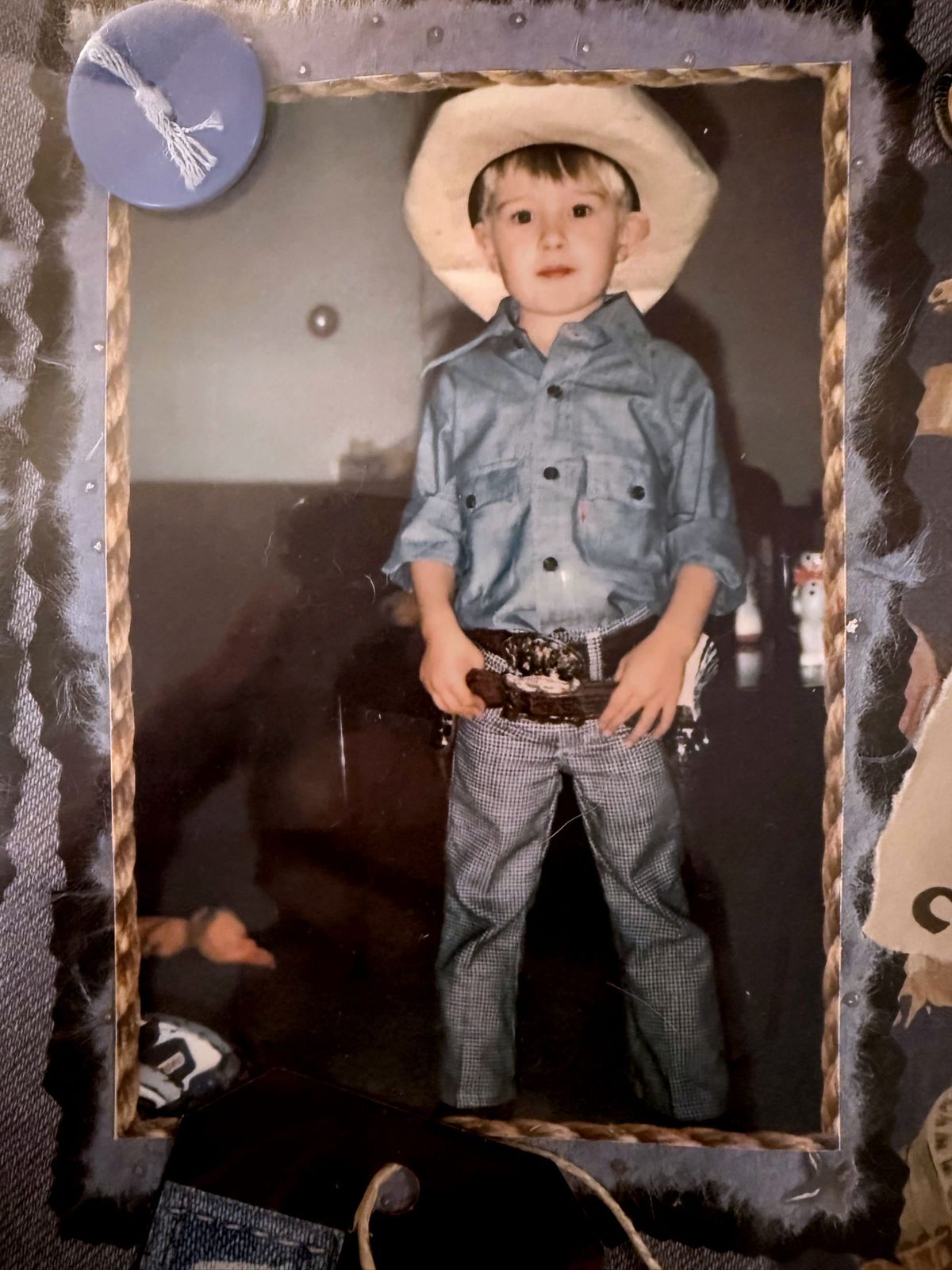
As a small child I loved playing gun fighter. For a time I thought there would be nothing better in the world to be than a gun fighter in the old west with the morality of one that protects the poor, downtrodden and powerless.
It would be great. I would have a horse. And a cowboy hat. A couple of six shooters as well as a winchester rifle. And I would find the bad guys. When they were honorable bad guys we’d duel. I would win due to my wicked crazy speed. When the bad guys had no honor, we’d just shoot it out. I’d win despite being out numbered. Safety restored by the most dangerous western fun fighter that ever walked the west.
Oddly, I was never a sheriff. Or a vigilante. A bit of a bounty hunter. Perhaps, if times were hard, a bit of a desperado, someone who was a bit of a rapscallion or trickster than outright ne’er do weller. All of my characters were lone wolves; even when playing with others as I didn’t prefer to take direction from others nor to boss others around. I never cared to be in a gang or posse or crew.
No, it would be just me and my horse riding endlessly across the desert looking for bad guys.
When I first encountered The Good, the Bad and the Ugly, I was floored that there was a movie that depicted the landscape and characters that would have felt quite at home in my head as I lived the life and times of tough, hardened, pre teen boy who stood toe to toe with the worst of the worst.
The Good, the Bad and the Ugly is not just a movie, an album, a story, a satire, a social commentary, or an anti war film.
It is all of these things integrated into one fantastic artistic package. Highly influential; often imitated; never bested; it is by far my favorite piece of cinema.
And I love the soundtrack. The soundtrack is essential to this film.
At root, The Good, the Bad and the Ugly is a dead simple story about three men attempting to best each other in locating a hidden treasure of gold. Directed by Sergio Leone, the cinematography is brilliantly captured by Torino Delli Colli’s fantastic camerawork as he highlights sweeping vistas via the wonders of Techniscope film. Together they invite us into this simple story and ask that we join them on an intriguing journey towards a climactic ending.
The wide angled shots of the arid and barren landscape that Delli employs contrast with the many close up facial shots of the characters that inhabit this environment; an environment suggestive that survival is hard fought, earned, and never easy. These close ups of each character permits the facial features of Leone’s colorful cast to convey their inherent nature without the use of dialogue. The dialogue that is sparsely used throughout the film remains concise and to the point and does what it must and then exits the scene.
The nature of these inhabitants most frequently wanders towards directions of ill intent. The characters throughout the film do bad things to the few innocent characters we are introduced to and they likewise do bad things to each other. The bad things they do frequently include death.
One of these characters may be labeled as good, but the Good one is more “less bad” than truly good. Yes, the Bad one is unquestionably bad, but it isn’t like the Good one doesn’t also engage in some forms of torture against the Ugly one. He also intentionally places the Ugly one in unnecessarily dangerously perilous positions that could cost him his life. That is not to defend the Ugly one as he also does a great many amoral things, bad things.
Interestingly, the Ugly one is the only character that is provided some form of backstory to help somewhat explain his lack of morality. As such we are often compelled to find him more sympathetic as a character despite his poor choices. Tuco is played brilliantly by Eli Wallach. He provides necessary comic relief throughout the film, but it is provided in a manner that does not come at a cost his credibility as a believable tough guy. It is Eli Wallace, not Clint Eastwood, that is the true star in this film. Eastwood as well as Lee Van Cleef provide solid anchor points for the other two legs of the stool, but their characters are narrower in range; more simplified in expected behaviors; and as such offered fewer opportunities to expand and develop over the three hour film. Eastwood plays a stoic individual who is capable of cruelty, but in the end will do the right thing. More or less. Or barely. Van Cleef plays the quintessential bad guy and will always do the bad thing. Both characters do what is expected of them and are fairly stereo typical. It is Tuco that permits this movie to expand beyond the stereo typical laziness behind the “Good guy vs Bad guy” trope, as he is surpassingly honest in manners that the others are not.
Story and cinematography aside, I cannot imagine Sergio Leone’s film would have impacted me as it did without the music of Ennio Morricone. Given the simplistic story; the accompanying score necessarily demands we move forward and observe and persevere with the characters that we watch throughout the film. The music is suggestive that this quest is worth our investment in time, not because the characters are simply good, bad, or ugly, but rather because they are compelling in their relentless drive, passion and desire to best the others as they hunt for the elusive treasure.
From the first moment of the opening credits you are drawn into a different realm than the one you currently inhabit. The inherent graininess of Techniscope film requires us to suspend our belief in our daily life and instead choose to believe we now reside in a forgotten old west. This transformational experience occurred in 1966 when this masterpiece was first released. It continues to be arguably more necessary during the digital age decades later when we confuse fiction and reality.
Compared to modern film techniques that rely heavily on expected Computer Generated Images and predictive Artificially Intelligent generative practices, the audience will see and hear and experience an entirely analogue story that simulates a believable alternative reality that is oddly entirely out of the grasp of modern digital cinema which often too readily favors needless bells and whistles over masterful creative story telling.
The very first thing you will experience as you watch the first few seconds that mark the start of the movie is nothing more than a somewhat crudely stenciled horse and rider galloping along the right side of the screen. It gallops as though it is heading towards the left side of the screen. I does so against a splotch of red. The red is a shade that is suggestive of a blood splatter. Accompanying this is the sound of a somewhat saturated 2 note melody played on a recorder of sorts. It sounds primitive and ancient and vaguely recalls the sound of a coyote. The two note melody is then repeated with a disturbing primitive wordless vocal utterance as a stenciled horse and rider appearing along the bottom right of the screen; this time galloping in the direction of the left side of the screen; it does so against a second splotch of red. And then the two note melody repeats a third time via a bass ocarina as a horse and rider gallop across the upper middle center of the screen. They gallop heading left to right as a third splotch of red is added to capture the white silhouette in action. The red splotches begin to bleed together; furthering the human connection as the screen heavily absorbs the red hue.
There are a number of threes in this movie. The three timbres for this two note melody, for example, align to each character. The recorder is the “Good” guy- referred to througout the film as “Blondie”. The wordless human vocalizations represent the “Ugly” guy- Tuco. Finally, the bass ocarina represents the “Bad” guy- Angel Eyes.
Another interesting thing about Tuco is that he is the only character that we will also know by his full name: Tuco Benedicto Pacifico Juan Rameríz. He has a nickname, the Rat, but we hear that only in passing. Contrast this with Angel Eyes. We only know him by the name “Angel Eyes”. Blondie is also known as “the Man With No Name” as he spanned across two other Leone movies in which he also lacked a name and was only referenced by the nicknames “Joe” and “Blanco”; the generic aspects of these nicknames further anonymize the character. In the end he becomes “just a dirty son of a bitch”.
Eight seconds into the start of the intro we are introduced to a percussive beat, undefneably reminiscent of a native american beat, as the screen turns red and a stenciled black horse and rider gallop across the screen. This is immediately followed by the saturated crack of a six barrel pistol firing as the title credits begin.
This was the first movie I saw where the entirety of the credits are depicted at the beginning of the movie. No credits of any kind appear at the end of this movie. It just ends. You are not left in your seat to wonder if you are supposed to stick around to see something non credit related. No teasers, outtakes, bloopers, sneaky end scenes, or leaving you in the dilemma of choosing to politely stay and watch or to simply bail. It's a nice touch really. I prefer this provided the credits do not go on for days.
This introductory piece, the title track, as well as the ending musical piece best capture the fundamentals that drew me into its audio spell. These sounds, despite their modern origin, are fundamentally primitive in tone. The audio sounds much older than it is. It succeeds because it is not anachronistic. These sounds were not the pre-analogue music that one would have heard in the literal old west, though they confidently suggest such. The soundtrack somehow enhances the authenticity of the film despite being inauthentic itself.
The music that develops the climactic ending is something I reference for any climactic scene I encounter and choose to dissect. It was so effective in this film that I am no longer confident I could accept a truly climactic moment in cinema without some form of musicality to shape the moment. It is perhaps more true than not that it is the music and neither the actors or directors or camerapersons that heavily guide the type of impact the climax will have on the audience. Morricone creates the meaningful and necessary suspense through music that he has matched to Leone's correspondingly visual depiction of the three men laying it all on the line in a vast landscape that has been skillfully captured by Colli’s meticulous camerawork.
This becomes apparent as we observe this scene over a span of 5 minutes. The music moves gradually through a heightened state of tension as it presents two phases during this scene. And yet the characters barely move during this time frame. The scene begins with a wide panned shot of what is effectively a Roman circus surrounded by graves before we are introduced to a variety of close up shots that momentarily linger until rapidly cutting to the next close up. We see each character’s face and, importantly, their eyes. Eli Wallach is truly in tune with his character; his eyes shifts his eyes wildly about. He’s on edge. Its great. Clint, ever the cool guy, produces a Zen like calm. We sense a form of certainty to his course of action. Van Cleef, in contrast, makes us nervous with his almost desperate intensity. He is no coward, but do we sense a flicker of doubt? Next we are exposed to several shots of close ups showing us each character’s hands and weapons. Of particular note is Van Cleef missing a part of his finger above his last knuckle on his trigger hand. Leone’s incorporation of these idiosyncratic character details further emphasizes the individuality of each character that he splashes onto a screen. The music, has an old world familiarity to it, we hear trumpets, and this brings forth imagery such as a spectacle in a Roman Circus where a victor will receive all of the glory and spoils. It is a moment of utmost gravity.
We know what is about to go down. We are not going to look away. We are enamoured in Leone’s spell. We do not quite know when we will be released... until he finally pulls the trigger and brings us to conclusion.
Interestingly, I prefer to hear less than pure audio captures of this soundtrack. The pristine versions, e.g. a lossless version, lack the grit and griminess I prefer. I think my appreciation for a deteriorated version of the soundtrack is likely due to my having frequently watched the movie on modest television sets back in the day. Our televisions had pretty basic sound quality that possessed eq qualities that emphasized the characteristics of the dialogue centric nature of that medium. The speakers on old television sets were never intended to produce a replication of what one would hear in a concert hall. Television sets were simply intended to capture audio and video coming through the air waves in a manner that was acceptable rather than brilliant. We did not, for example, have surround sound and a subwoofer or other sound enhancements. We most often had only that one little speaker coming directly out of the television set. It was analogue and warm and a bit saturated if you cranked it up.
Relistening to a few versions as I wrote this, I definitely prefer it when it the audio sounds as if it is coming through a modest television speaker rather than hi fi audio system. Strange to say, but I prefer the audio to sound like a recording rather than it sound as thought it were played live in, say, a symphonic hall. Aside from the historical familiarity, the degraded audio further demands I choose to enter this other world. For some reason I like to be formally presented this choice in such a manner. It is not dissimilar to choosing to open a book and then agreeing to enter the Author’s world by reading their text. When you do this you agree that you are leaving your world and your preconceptions, temporarily, and permitting yourself to be guided by theirs.
This music changed how I viewed audio in cinema. Prior to this movie I had never really noticed the musical scores that accompanied movie scenes. I had only really understood music to accompany movies through Disney styled songs. I was never heavily interested in those musical inclusions and often thought them silly. I guess I felt the instrumental portions of a soundtrack were just there to provide some sound for the credits and to tell us the film was about to begin or end.
I have no idea when I first saw this movie. I have no recollections of my surroundings at the time as I seem to have been fully transported into its world only to resurface shortly afterwards, entirely detached, into the banal world I originated. Who knows precisely when I first saw it? Perhaps I first saw it on VHS in the early 1980’s? Or perhaps it was earlier on broadcast on day time tv. It was likely my first R rated movie. Though if it had been through an over the air television station it would have been modified a bit to fit the F.C.C. standards back in the day. It seems almost impossible in our the current times to view this as an R rated move given the number of politicians and rich businessmen getting away with pedophilia and financial theft with reckless abandon. That is to say the rules were much more stringent back in the day as to what was deemed right and wrong. We may not have loved the rules, but at least we knew what the fuck they were.
Regardless, back in the day this film was apparently deemed a bit too adult for youth and “they”, whomever “they” was, sought to protect us from it.
I was not traumatized by any of the so called adult related content.
I was, however, left with a sense of wonderment that I had witnessed the most perfect movie I had ever seen up to that moment. I thought it was better than Star Wars. Which for my age at the time would have been a big fucking deal. Who knew it wouldn't really so much be topped but instead simply transform itself into the reference for most of the cinema I prefer? True, other movies would join it, but this one has remained steadfast and constant from that moment I first witnessed it. It is almost the only film I will intentionally rewatch. I generally loathe rewatching most films, even when I consider them great. In fact I am still mostly unable to walk past a screen if I see ths film on it. More often than not, I will immediately be sucked into its powerful tractor beam and transported to Leone’s fictional old western world. When this occurs I have to hope I either didn’t have anything planned for a couple of hours, or that the film is close to ending as I will sit there and stare at the events unfolding much like a cat on the floor looking up at a tin of tuna on the counter once it has been opened.
It is the only movie I own on DVD. I don’t even have a DVD player.
Prior to this film I had also never really noticed instrumental music in general. I was inclined to believe music most always had words. There were occasional, nameless, exceptions. We did not listen to jazz or classical music in our household so I had little reference point for wordless music. Technically, the sound track to the Good, The Bad, and the Ugly contains vocals, but these are most often wordless vocalizations. Used in this manner I always categorized them as a form of a human wind instrument of sorts. Their use by Morricone is consistent with their use in classical pieces rather than the pop, rock and country tunes I was familiar with at that age.
Something about Morricone’s use of instrumentation and its seemingly primitive nature awakened an awareness in me for wordless music. The sounds he employed served purposes beyond their obvious sound. The assignment of specific instruments to specific characters as one example. My appreciation for the soundtack made me curious about other music that was similar in intent and design. Interestingly I became most aware of how music could facilitate dread, suspense and even terror without using words to instruct us to feel such. Eventually I became even more aware of this to be acutely true when I later explored the horror genre of film. Movies such as The Shining, Amityville Horror, and the Exorcist were impactful without watching the films as you just needed to hear a small simple refrain from their soundtrack to get the heebie-jeebies going. I found it fascinating that sound alone could do what a visual often could not and do so with far less time and content. My appreciation for these horror movie soundtracks include “The Thing” which was also composed by Morricone.
This appreciation spanned further with the movie Aliens where the soundtrack heightened the sense of isolation we feel for Ripley as she finds herself, deep in space, impossibly far from civilization trying to survive under unreasonable circumstances surrounded by desolation. And of course we can’t forget Blade Runner, a sound track that creates an otherworldly future environment and climate believably derived from the physical world we inhabit.
These musical pieces were never heavily played on the radio. They often lacked the symphonic classical nature of many movies that were appealing to mainstream audiences for instrumental music. Though I did heavily listen to the various compositions that John William’s did for movies such as Star Wars, I tended to lean heavily in the direction of pieces that tended to expand sound using abstract pallets. John Williams is more classically aligned and the sounds we hear are from instrumentation that most often do not seek to be novel or unique, as they borrow heavily from the expectations we have in the world in which we already live as they guide us to understand the foreign world (or galaxy) we have agreed to visit.
I enjoy the escapism new approaches offer to me. As such I often prefer soundtracks that somehow thumb their nose at convention when necessary. Morricone’s approach tends to do this for me in many instances. Though he can nestle up against conventional approaches, as I would argue he did in The Thing, The Mission and The Hateful Eight; even in these scores he will still tend to break convention so as to figuratively wrench us from our rickety movie theater seat and bring us directly into the film with music that we have never quite heard previously in our literal world.
The film is not entirely instrumental as there is one piece in the movie that does contain lyrics. As Angel Eyes has the holy shit beat out of Tuco in the Andersonville prison camp, a group of prisoners sing “The Story of a Soldier”, aka “La Storia di un Soldato”. This song happens to be an example of Diegetic music where the characters are aware that they are creating music that facilitate the events that are unfolding before them; even as that same music conveys a different metaphorical message to the audience observing the characters in the story as they perform that music. In this case the soldiers are forced to play a song so as to deaden the noise of Tuco getting the shit kicked out of him and they understand they are doing this. As an audience we understand this as well. We also understand that this music intends to fill us with sorrow as we see the mournful facial expressions of the prisoners of war and watch Tuco thrown around the room.
I became aware of Nancy Sinatra and Lee Hazelwood’s album Nancy and Lee thanks to The Good, the Bad and the Ugly. Years ago I was sitting in a run down independent movie theater that was running the film as it had apparently been remastered or something of the sort. I couldn’t pass up the opportunity to see it in a theater. The movie was released in 1966 and I had not been born at that time. I had never seen it on a screen that was not a television set. While waiting for show time the theater played Nancy and Lee in its entirety. It was somehow appropriate, as though it was transporting the theater and me back to the late 60’s when theater was much younger and before I was born. Given how shitty, lumpy and low back the seats were, I would imagine those seats were the same seats that were in the theater back in those days. It was great.
The soundtrack also kindled my interest in Herb Alpert’s Tijuana Brass band as something I desired to listen to rather than something that I was randomly exposed to on occasion.
As a child I was on the fence about Herb Alpert and his Tijuana Brass Band in that I always enjoyed their work whenever I heard it, but the music lacked words and I wasn‘t sure this music was intended for my young ears. My parents had a copy of that Whipped Cream album. And I did enjoy it. The woman on the cover lathered in whip cream sure was fun to look at.
Still…
At the time I associated most all music that lacked words with old people. These were the days when I had a genre called “Old People Music” running around in my head. That genre included Lawrence Welk and all Classical music. In my head it seemed the only people who intentionally preferred such music happened to be old, so, ipso factso, I assumed the music was “from the olden days” and that many olden days people couldn’t really understand “modern music” so they kept on listening to old fashioned music that they could understand. Music for old people. AKA Old People Music.
To be fair, this genre I had created in my head also extended to music that did contain certain vocals. Say pieces by Ray Coniff or Engelbert Humperdinck. I included Tony Orlando and Dawn in this group even though they themselves appeared be youthful people. The critical litmus was always to look around and see if anyone not old was listening to it, and if the answer was “no”, then into the Old People Music memory bin the song would go.
Old People Music was not to be confused with music made by old people. I was not prejudicial against old people. It was simply that it was not my fault that some old people were unable to like the Beatles or thought that the Rolling Stones were the devils music and could not possibly bring themselves to give it a listen. I accepted that there were multiple valid reasons that made them incapable of understanding or listening to modern music.
That said, of course old people could make whatever music they wanted. It was a free country at the time. And sometimes the old people chose to make music other than Old People Music. I even enjoyed the music some of these people made.
Take one of my favorite old people singer-song writers, Hank Williams, for example. Ever since I first saw a picture of Hank Williams, I thought of him as grandfatherly old. He looked and sounded ancient from my young perspective. That I later learned he died at 29 did not matter one bit in my way of thinking. He was old nonetheless. He was old because 1) he looked old in pictures. 2) He was only pictured in black and white, inferring he was so old he predated Kodachrome and, as Paul Simon would say, “those nice bright colors and the greens of summer”. 3) He died in the olden days, almost twenty years before I was born and therefore must be old since I was young (at the time).
Because I heard his songs frequently, I considered him somehow transcendent to time as though he continued to spiritually walk amongst us, aging along the way, as we all travelled together through time. I did not consider him Old People Music because people who listened to him were not always old people. Me, for example. My friends for other examples. The younger Hee Haw people on tv. My youthful parents. In other words, normal people. I enjoyed Hank Williams a lot and that he was old made no difference to me. He was simply playing music that everyone could enjoy regardless of age. He was very fair in that way.
I also enjoyed Willie Nelson and he was old. He was nearly 50 at the time. Normal people listened to Willie. Ditto with Loretta Lynn who was so old they made a whole movie about her entire life and she was as old as Willie. It was curious that some of these country artists could make music young and old people could enjoy whereas other people could only do one or the other but not both.
For whatever reason I slotted Morricone’s The Good, the Bad and The Ugly into normal people music. Not for any particular reason other than I didn’t really know anyone who listened to it for pleasure and therefore could not pin it to any old people. Or maybe I was recklessly categorized all soundtracks into the Normal people bucket as most of the old people in my circle didn’t go to the movie theater?
My categorization system was built upon mighty shaky grounds.
But none of that really matters I imagine. Right or wrong, I found many of the songs I heard from Herb Alpert and his Tijuana Brass band somehow evoked the same old western atmosphere I felt when I listened to The Good, the Bad and the Ugly. I determined I must enjoy Herb Alpert and his Tijuana Brass Band for valid reasons. Perhaps it was the reference to exotic sounding Tijuana? Perhaps it was the Spanish inspiring trumpets? Perhaps because they performed a song referencing bulls?
I suppose I was cultivating my own musical tastes and preferences by culling them from my own experiences and opinions.
I’d be remiss if I did not also mention Marty Robbins and his album Gunfighter Ballads and Trail Songs in this discussion about The Good, the Bad and the Ugly. It is highly likely that my enjoyment of Marty Robbins’s gunfighter ballads were a pre requisite for me to enjoy Ennio Morricone’s The Good, the Bad and the Ugly soundtrack.
When I first heard the song “Big Iron”, I loved it. Here was a song that was a story about a gunfighter; something I had developed a keen interest in as a child. I was enthralled with stories about the old west as I lived in the portion of the world in which the old west occurred. When I first heard Marty Robbins sing about “the big iron on his hip”, I was elated that I had discovered that there were actual songs to augment the narrative and fictional universe I wandered around in my brain whenever I pretended to be a gun fighter. And the song was good to boot!
Gunfighter Ballads and Trail Songs is a firm, unintentional, topical companion piece to The Good, the Bad and the Ugly. My childhood brain always insisted these two were connected as though they were created together and for the same purpose.
However, they are not. Gunfighter Ballads and Trail Songs predates The Good, the Bad and the Ugly by seven years. I’ve encountered no evidence sugggesting Morricone mined the depths of Marty Robbins’s Gunfighter ballads for direct inspiration. But I also don’t know everything.
Regardless, I nonetheless believe that Morricone enters and then permanently resides in my head via his soundtrack by tapping into the same rural western romanticism that Marty Robbins tapped into when he created songs such as “El Paso” and “Big Iron”. Despite being Italian and despite writing a soundtrack for a movie that is actually shot in Spain, it immediately reminds me of my natural roots on this planet. That is pretty amazing.
For what it’s worth, I find Hermanos Guitirrez is the modern extension of The Good, the Bad and the Ugly. Whenever I give El Bueno Y El Malo a listen I am immediately transported to some nameless wide open arid desert landscape and I feel immediately at home. These two brothers happen to be Swiss Equadorians. I find it fascinating that after a 40 year odd gap between my discovery of The Good, the Bad and the Ugly; Gunfighter Ballads and Trail Songs; and seeing the bounty hunter Bobba Fett in the Empire Strikes Back; I was lucky to discover another companion piece to a particular iconic western aesthetic that I quite enjoy.
It probably comes as no surprise that I eventually outgrew my childhood playtime fantasies to become a gunfighter. It was an inevitability.
For one, I was living in modern society and not the old west. While violence is as popular as ever, gun fighting duels old west style is not. We use cars instead of horses. My times are not those of the old west. Everything is digitized now.
For two, I understood that harming others, even with so called good cause was a practice that led only to one’s own ruin regardless of whatever rationalization we band aid over the top of it. Harming other people damages a person. I chose to limit the amount of harm I do to others by being mindful to not intentionally harm others in the first place and that makes me a better person. Though I continue to be imperfect.
For third, I was always at heart a pacifist and obviously a career in gunfighting was philosophically at odds with that. In the end I would rather be a brave pacifist than a timid or evil gun toting creature.
So, one day I put my guns aside and walked away from them.
But I kept the attitude and then rode away into the horizon.