The Queen Is Dead
"There is a light and it never goes out."
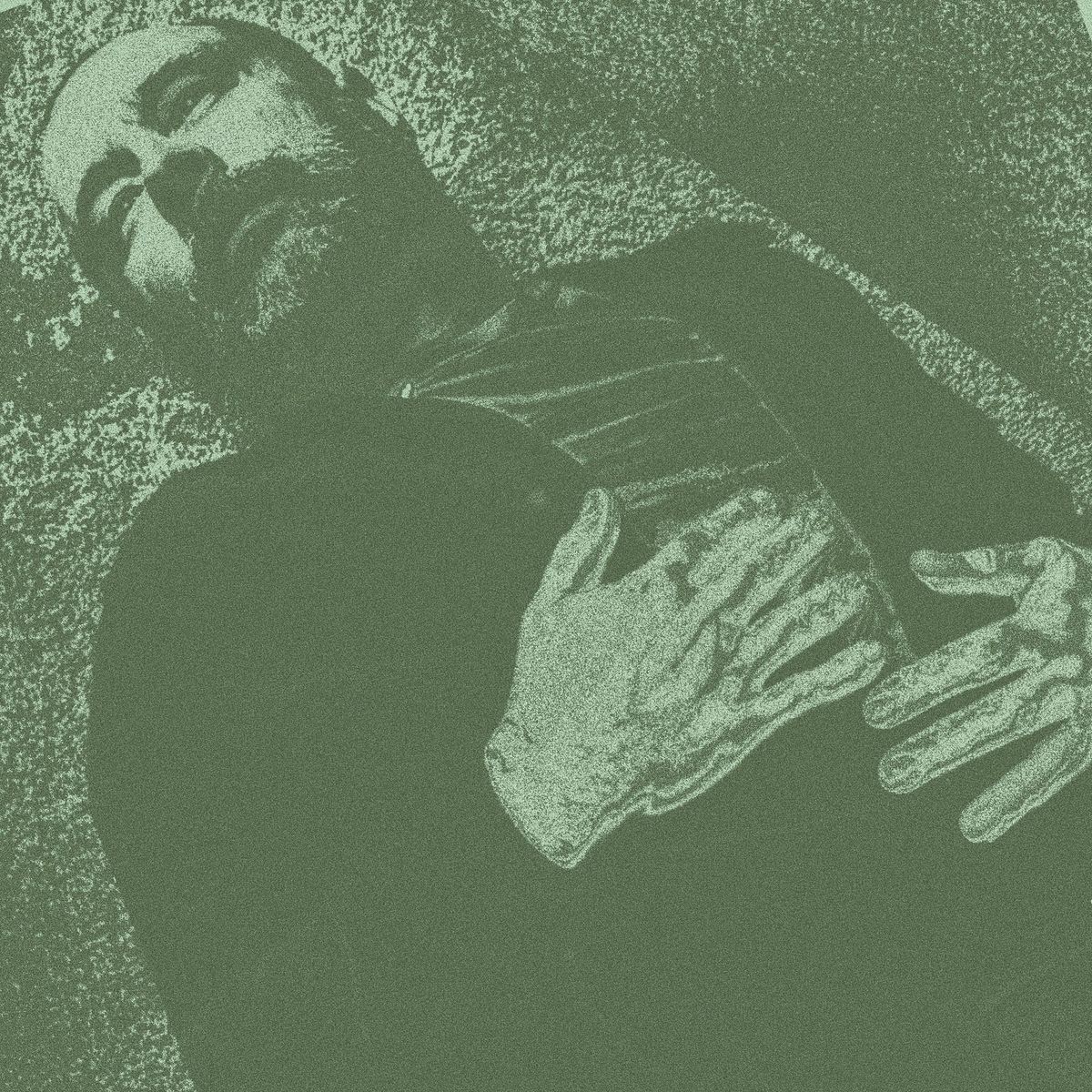
I was not certain I would include this on my list of influential albums. Not because I question the worthiness of the album. It’s a great ablum. There are probably only a couple other of albums that I may have listened to more. This is an album that I listened to almost daily when it was released. It was an album that I still listen to frequently up through today. There are some albums I believe are great and influential, but I listen to them far less than this album. I love everything about this album. I never feel I have outgrown it and that is largely due to the amazing combination between the composition of the songs; the lyrical choices that were made; and the performances captured that were intelligently transformed into this cohesive masterpiece.
It is almost impossible for me to listen to only one song on this album without listening to all of the other songs on this album. If it comes to my mind that I want to listen to “I Know It's Over”, well, I seemingly can only get there by beginning with track 1, “The Queen Is Dead”. And if I hear “The Queen Is Dead”, then I will have to hear the second track on the album which is “Frankly Mister Shankly.” Why? Because my ears will naturally expense to hear that acoustic guitar strum right after the “Queen is Dead” concludes. And once ”Frankly Mister Shankly” concludes, it will naturally anticipate Morrissey’s croon will introduce into “I know It’s Over.” And so it goes.
Given this, how could I not include it in my list of influential albums? Excluding it would suggest I didn't find this album generally influential. Could I really say it didn't influence me? Was it really ear candy alone and nothing else? Junk food for the ears? How could one ingest an album so many times over the years and then suggest it left no meaningful influence on my behavior?
In part I wanted to omit it because I simply knew that writing about it was going to be a chore. Editing it would be a nightmare. I would be forced to somehow cobble together a bunch of seemingly disparate thoughts into a somewhat cohesive narrative and that would be work. I couldn‘t Gonzo journal my way out of it. Or performatively Kerouc my way through it. A large part of me did not want to wade into what would probably morph into a boring lecture on literature, education and geopolitics. I risked being overly banal and academic.
But I also initially didn’t really understand if it did or did not influence me. I was skeptical. These blokes from the Smiths were of a slightly different age bracket, a different geography and had entirely different experiences than what I was experiencing at the time this album was released. I was unclear how I related to them at all and I wasn’t initially convinced the album influenced me a level that warranted consideration and putting words to digital paper.
In the end, though, I determined (obviously) that it did influence me. Perhaps in an ironically academic manner that my American born educators were unable to compel from me. Chiefly, I believe this album made me a more serious student of the arts. Perhaps I latently understood this, but wished to avoid writing about it because I feel in the day and age I write this that the pursuit of knowledge, understanding and science is under relentless siege that people that seek to wish away the inconvenience of demonstrable truth with corruption lies and greed? Perhaps I am growing old and tired and refuse to argue that the world is a sphere?
It wasn’t that we never covered the art of Europe, the so called ”old world” in our scholastic studies. It seemed like every year we read something from Charles Dickens. We knew who Shakespeare was even if we also questioned at times that it was the same English language we spoke. We knew world history. But these were also the years of Reagan and the notion of American exceptionalism began its ascent even as the Cold War had yet to conclude. Though many of my educators were well intended, they often didn’t express a lot of enthusiasm for non American interests. Often it was sold as “This is only interesting because it shows just how great we are in comparison.”
I would argue The Queen Is Dead is a very English album and therefore something that most of my peers and educators of the time would dismiss as being uninteresting due to that alone. This was particularly true in the rural area where I grew up. We didn’t feel that we had anything remotely in common with the people of Denver, so it would be expected to be even less so with some people living across the Atlantic. Albums espousing a more Eurocentric point of view tended to have muted levels of success in the States. I would argue that reason Roger Water‘a first solo album “Pink Floyd‘s Final Cut” was received poorly wasn’t just due to the omission of his bandmates in the creative process, but it was also references to things like the Falkland Islands and Thatcher within the lyrics that prompted fans in the U.S. to feel they had less reason to listen to it. So they didn’t.
(I honestly feel that while the Final Cut doesn’t succeed as a whole, it nonetheless has some solid songs on it. “The Gunner‘s Dream” and “Two Suns in the Sunset” in particular are great songs. I likely only came to feel this way because The Queen Is Dead prompted me to consider alternative perspectives beyond those I was initially taught and it prompted me to listen to The Final Cut more than most other folks.)
The Queen Is Dead doesn’t even begin with music created by the Smiths. It opens with Cicely Courtneidge’s rendition of a World War I English standard “Take Me Back to Dear Old Blighty”; a ditty that intended to provide some respite for soldiers serving at the time. The version on The Queen Is Dead is lifted from the 1962 film The L-Shaped Room. The closest association I had to this was my Dutch immigrant grandfather enlisting in the Second World War. Which is to say it was a far cry from my day to day experiences in the land of cowboys and farmers.
Were this the tone of the entire album, it would have certainly lost me, but after 15 brief seconds it transitions into a much more aggressive tune as some guitar feedback leads us into a thunderous drum loop that is heavy on the toms and with the right touch of reverb. This attention grabbing contrast abruptly captured my attention. We then get just a small bit of a guitar strum for some texture. I was hooked once the bass line came in about 40 seconds into the song.
Still, Morrissey is singing an awful lot about a queen. During the Reagan years Americans disagreed, but were almost uniformly in agreement that antiauthoritarian individuals ruling our society was a huge no-no per our founding documents. A song about a modern monarchy risked losing me. While I had my own issues with Reagan politics and economics, I liked monarchies even less given our country’s origin story. I could have easily been of the mindset of “Sure down with monarchies, but what does this have to do with me?” We had tossed out the monarchy some 200 years previously, preferring a more democratic form of government. We were never to return to…. Oh wait, never mind, things change over time. (Full disclosure: I am still against the rule of a singular individual over all others despite modern trends.)
The point is that this album contained almost no political or social references that were directly familiar to me. Yet, the album was nonetheless successful in its construction and language that it managed to bridge an almost impossible gap where a group of guys in Great Britain were able to communicate effectively with some teenage twerp in rural Colorado.
Even the album cover art was considered. The cover art is derived from a sill taken from the 1964 Film L'Insoumis (The Unvanquished) and the person depicted is French actor Alain Delon. Even though I did not know this for years, I nonetheless was captured by the artistic allure that was implied. It has a modern classical quality to it. True the person laying on the cover is clearly not a queen, but still, the person has a somewhat resigned appearance and forces you to consider the connection between the person depicted and the title. It does what good art should, which is to encourage your brain seek answers to unprompted questions to obtain meaning.
Sonically, it was both familiar yet novel. It was a rock album of sorts. It had elements of rockabilly and even a subtle country twang at times. But it was somehow novel at the same time. It introduced me to an entirely different world of people who experienced the world differently and expressed themselves accordingly. Most of the rock that was more readily available to me on the radio or through television music videos, tended to be heavily American oriented like Bon Jovi or John Mellencamp. It seemed like Ratt and Motley Crew were often playing.
It also seemed that rock was moving into the back seat of the airwaves during that decade. In 1986 the top song in the U.S. was “That’s What Friends Are For”. Whitney Houston was at her peak popularity and Mister Mister was a thing. Eddie Murphy had a hit.
An exception was the Pet Shop Boys, which was not a rock band, but was a curiously European exception to the U.S. charts. Their fantastic West End Girls album was something I had in my collection and though I didn’t listen to it as much as TheQueen is Dead, I do think it was in a small part responsible for me going out on a flyer and taking a chance on an album from a band that I had never heard.
I had become familiar with punk bands, many of whom were from the same country as the Smiths, but those bands were much simpler in their communications and sonically they seemed more familiar. The bridge of understanding to punk music, particularly for a teenage boy, was a short one to cross and many were decidedly tinged with American concerns so I could readily latch onto the various sentiments that were expressed by bands that fell under the punk Genre.
That said, the tone set by the eponymous first song off The Queen is Dead hit harder to my ears than much of the punk music I tended to prefer. It was also lyrically and vocally entirely intelligible, communicated an entirely different emotional range, and had an odd aura of sophistication that punk music generally jettisoned. The song and those that followed didn’t shy away from high browed themes, references or word choice. And that appealed to me for reasons I still don’t clearly understand. Morrissey presented an almost conversational piece of prose in his lyrics and presented them in a direction that more closely resembled Frank Sinatra than Gibby Haynes.
Yet, the vocals sit in context to the music that surrounds them. They did not supersede the instruments that accompanied them.The lyrics never sound forced. They sound appropriate and natural and exceptionally phrased to the structure of the songs. And they provide space for the instrumentation throughout the album to shine. The title song, for example, lyrically concludes and yet the song continues onwards as it morphs into Johnny Marr’s flailing guitar that rounds out much of the last two minutes of the song. The juxtaposition between the intro, the lyrics and the outro is fucking spectacular. It is indelible. Fluidity with a heap of grit. I never seem to tire of it.
Arguably, this is possible only because the foundation set by Andy Rourke on bass and Mike Joyce on drums permits the other two band members shine as individuals. I think Rourke and Joyce are often overshadowed in their contributions towards the Smiths’ sound and do not get enough credit. While the creativity primarily seems to have stemmed mostly from Marr’s songwriting and Morrissey’s lyrics, the stable foundation of Rourke and Joyce glues everything together. There are times I will listen to this album just to follow the bass and drums alone.
The lyrics are brilliant prose. They establish a crisp scene for each song and they do this exceptionally well. Morrissey has a Georgian era sensibility that that he modernizes when necessary to remain believable. My position is that Morrissey’s lyrics on this album are at his authentic best. He is youthful enough to be appropriately melodramatic, and has the personality and obviously the voice to pull it off. His lyrical approach and word usage harkens back to the times when the epistemological novel reigned supreme in his home country and he uses it to paint the mood with punchy detail that somehow makes everything real. Quite often he is very biting, but he can also be sincerely sentimental. When he is riding on a bus and says “to by your side is such a heavenly way to die” you easily see and feel the moment. When he says the soil is falling over his head, you see yourself in a grave being buried and feel overwhelmed by dread. He avoids being dated by placing old references into modern context. Joan of Arc is listening to a Walkman cassette player that melts has she burns at the stake, for example, and it both romanticizes a tragic event in history while simultaneously satirizing the lyrcisist.
There is a unique authenticity in Morrissey’s vocals during this time period. I doubt many other people could pull this off. He captures the best elements of pop vocals, but doesn’t water them down with unforgettable trite lyrics. He is certainly no more melodramatic than 99 percent of other lead vocalists, but when layered onto Marr's rock oriented accompaniment and Joyce's and Rourke's foundation the gravity of his vocals carries a certain degree of weight heavily lacking in that era of music. Perhaps the lyrics get a bit pretentious at times, but Morrissey sells them confidently.
Fortunately the album is not overly long. I think were it a 60 minute plus array of tunes presented in this manner it would wear on me. But the album is only 37 minutes long. It is enough to take you on the journey without letting you wandering away bored, fatigued and lost. The album ebbs and flows in a pleasant manner. The track order seems carefully considered. The songs are well balanced between vocals and band. It is a straight up rock album. It's fantastic.
It’s great and all that I sonically love the album, but that alone would not necessarily mean it is influenced me. My initial reflections and considerations suggested to me that I simply considered the album technically great and emotionally satisfying, but that it didn’t expand beyond that. That is to say, I initially felt it did not impact my behavior, my trajectory or my life in a manner beyond “I like the album!”
So I reconsidered its influence from other perspectives. Instead of going with a gut level emotional response or nostalgic reflections, I considered what could be different about my life had I not heard this album so extensively when I was first introduced to it. What did The Queen Is Dead tell a teenage boy growing up in rural America? Did he make decisions that he would not have made had he not heard this album?
That process was more informative.
It makes little sense that I, a person growing up in the rural west in the 80s should like this album as much as I do. Lyrically speaking it is heavy on a British understanding of the English language. I had not been to Great Britain at the time I first heard this album, but it sure seemed different than western Colorado. Songs were peppered with words little used in my neck of the woods. Words such as “spanner”, ”thrice”, “vicar”, “dole” etc. There were lots of references to dead English poets and writers. And of course references to a monarchical structure that my country of origin had wrenched itself out from under.
The local economy under which I lived was in shambles having banked on what became failed oil shale investments. A third of the population up and left because there were no jobs. My dad was a natural gas compressor mechanic at the time, and fortunately still employed, but many friends that were present when school let out the prior May, were no longer so when school resumed in August. Many houses across the valley sat vacant and were under the stewardship of the Housing and Urban Development wing of the Federal Government because so many people went bankrupt fled the Valley. My first job was to inspect these houses monthly for signs of vandalism or natural damage. Given the number of them, I made solid money for a teenager with a driver’s license as his only asset even though I was paid only a quarter of a dollar per house inspected. Though I was making reasonable money for a teenager, it was sad to enter so many abandoned homes, each one representing a dream that had been left behind.
Then Reagan years felt heavy and perpetually dreary to me even though I was in a climate with far more sun than Britain and I was doing reasonably fine. I would listen to this album frequently while I rode the old yellow school bus to school after the initial months it was released. I listened to it more so as we entered the winter months. The bus route was such that I was the first on, and I would listen to it in its entirety during the 45 some odd minute ride that unfolded as my fellow classmates were picked up in dribs and drabs. For whatever reason, it seemed like every day started out as dark and cold. An ugly old snow often blanketed the ground. Feed corn was a crop commonly grown in the area and the post harvest yellow brown stocks would poke through. Moisture would condense on the inside of the bus window and I would have to constantly wipe it off to look outside. Even though it wasn’t Britain, it somehow seemed to fit the tone and mood of Morrissey’s voice and moods and the sounds created by Marr, Rourke and Joyce.
I feel like I am a bit of an antithesis of Morrissey. To this day I tend to retain a lot of that stoic reserve and rugged individualism that consumes a lot of the people who grew up in the western portion of the U.S. that birthed me. I am not sexually ambiguous nor generally dramatic. I am a pretty straight forward “random western guy”.
Yet, I could nonetheless relate to Morrissey’s lyrics and his pained sense of isolation because he communicated his thoughts quite well.
It was likely that Morrissey gave me an easy way out to feel emotions that the culture that surrounded me heavily suppressed. My sense of isolation and yearning for human connection was decidedly more hetero, but Morrissey’s lyrics were vague enough to be relatable to any person who lamented a certain type of loneliness that we begin to feel only as we begin our exit from puberty. These are the years of our lives where our urges and desires are felt most strongly and we desperately wish for them to be fulfilled. And yet we slowly begin to realize many of them will never truly be fulfilled and our life will always be a constant series of struggles. Teen angst.
Morrissey was an arguably odd conduit for dealing with these developing awarenesses within me during these times given my rural origins and his urban circumstances. But his words spoke to me with clarity. I love his phrasing on this album. I love the words he chose to use. I’ve always had an interest in the variety of words that pepper the English language. I love the specificity that can be found across the language. Morrissey’s lyrics on this album likely furthered these interests. I believe this album successfully spiked a genuine interest in literature and art within me. I became particularly interested in better understanding the so called “old world” in manner that most of my educators had failed. I was suddenly interested in becoming more familiar with the culture and political references of that world.
This interest expanded my desire to better understand the use of references within artistic pieces. The album has a lot of artistic considerations and even though I didn’t know this at the time, it was this careful consideration of packaging that drew me into it. It was not album that was slap-dashed together. There was consideration to its structure, its content, and word usage.
Ultimately I think this album piqued my interests because I loved learning and this album successfully introduced me to aspects of both language and culture that were familiar enough for me to relate, but different and interesting enough that I felt a desire to apply my attention towards better understanding its nuances.
l love most aspects of the learning process. Learning has never ceased to be one of my most treasured values. To this day I spend most of my free time and even most of my non free time attempting to learn and grow my understanding of everything that surrounds me. The learning is an end goal unto itself. I do not learn to make money. Nor to finagle people out of money. Or to be the smartest guy in the room. Or to defeat people in bouts of argumentation. I just love to learn. I believe it has made me a better person.
A love of words, language and learning meant that I also loved to read. Reading is unquestionably the best way to learn whatever the fuck you wanted to learn. It permits you to remove the shackles and constraints imposed by others. By simply opening a book you can acquire your own education as a self directed learner. There was no debate in my mind about this when this album was released. I continue to believe this as I write this decades later. Reading provides the freedom to pursue whatever the fuck education you want and provided you did not seek to read only that which reaffirmed your emotional biases, your opportunities to learn remain endless. (Obviously this requires a free press and freedom to speak freely without censor. I have been most fortunate to have lived during a time and in a location that permitted this. I highly value this freedom and consider it inalienable.)
The release of The Queen Is Dead and my experiences during this time was obviously before the internet and so called artificial intelligence and the assorted slop and mindless deconstruction of language, thought and information control of the modern era. You couldn’t pull out a phone and stare at it for hours on end looking, more often than not, at the glib emotionally laden algorithmically curated mindless opinions and pontifications of others. Though imperfect, to read new content you had to find the means to get to the doors of a library and find your own path through the myriad of opportunities found within its walls. It required a certain type of diligence, critical thought and a mindful consideration that is largely absent in a digital age that curates content chiefly through sponsor driven algorithms.
I grew up reading books not texts, nor social media. I read all types of books as my interests varied. I learned much doing such. I didn't, and still don't, know everything, but the more I read, the more I understood. And paradoxically I also learned to understand that I didn’t know shit. I still don’t. And I never will. But my natural curiosity led me to try to understand everything going on around me and during the year I was introduced to The Queen Is Dead I began greatly expand what I chose to learn. That is something that continues to this day.
I wouldn't, and don't, consider myself the most well read. I don't know I if "fairly well read" is accurate either. So many books. So little time. So much less time available as each day passes. So many equally compelling distractions that are also valid learning opportunities. You can almost drown yourself in it.
But I have, nonetheless, read a l0t of books. As time progressed and the internet evolved it became more research driven and I migrated to digital repositories and a variety of internet forums that possessed genuine expertise and other digital methods. Ironically, as I find these modern mechanisms begin to fall apart as algorithms are replaced by inaccurate results from so called Large Language Models and so called artificial intelligence, I increasingly seek out books. (Even once useful spell checking, is failing me. As I write this I am constantly suggested words that are entirely contextually inaccurate suggestions and often refused the use of valid simple words. The word "going", for example, seemed to be inexplicably problematic when writing on a tablet.)
Back in 1986 when The Queen is dead was released it was only books. Which was a good place to start because it seems to permitted me to build an appropriate foundation for subsequent learnings. I don't envy modern youth as they have to swallow information the size of a river that never stops flowing. Everything is mixed together because there is so much information to swallow. Misinformation is arguably more prevalent than is accurate information. Bullshit ideas like “alternative facts” and the incessant broadcast repetition of lies posing as truth and the war on science often make it feel like we are living in modern rendition of the dark ages cloaked in the Information Age.
But at in the mid 1980’s, thank god, it was mostly just books that were the foundation of the educational process. Books require that you slow down and consider what was being communicated to you. Reading a book requires you to think and process the information that is presented to you and you do so as the words slowly unfold, most often without the accompaniment of pictures and certainly without video. You can't fake it if comprehension is your goal. Sure, you could turn pages without really looking at or contemplating the words by reading a summary. But I didn't take short cuts. I wanted to absorb the meaning behind the pages so I could consider my own perspective against the author’s point of view.
I do know that this album prompted me to take a course in English Literature. That course seemed to be the bane of many of my fellow students. For many of my fellow students it was boring hard to understand nonsense. I found it great. It was a whole semester of reading forms of English that for many may as well been in Latin. I think maybe only 2 to 3 of us in the class were innately interested in the actual content. Most were simply trying to run out the clock on high school, needed that one last English class to graduate, and not having many choices on the table, took the course because they felt they had to. But I was fully engrossed in the content. I didn’t even need to get an A grade as I was all set with my college of choice. I could have mailed the course in and settled for a middling grade. But instead, I put more effort into that course than all my other courses that term. I think I missed only 2 points off the final exam. I appreciated my instructor's efforts and time.
That lead me to college, where I initially felt I would major in English Literature. I loved my English Novel course. During that semester I read Oroonko, Humphrey Clinker, Tristram Shandy, Shamala, Pamela, Tom Jones, The Monk, Pride and Prejudice, the Vicar of Wakefield and a few others that currently escape my mind.
I even completed Clarissa if you can believe that. For the uninitiated, Clarissa is a beast of a tome. Depending on the publication it is often rendered over 1500 pages of 8 point font and closes in on almost a million words. Technically, only the Graduate students in my class were required to complete it, but I felt compelled to do so as well as I wanted to feel it in its entirety. I spent two weeks in this small forgotten outdoor table tucked away in a recessed outdoor area adjacent to the main library and read for hours on end. I would start reading in the late afternoon and eventually the lights would come on and I would plow through letter after letter reading Richardson’s drama unfold with only cockroaches keeping me company.
Written in an epistemological form, i.e. letters, if you let it be what it is, you can become fully absorbed by the increasingly dire straights of the namesake character of the novel and that wretched Robert Lovelace as correspondence after correspondence shares how the story unfolds.
When I look back on that single semester and the number novels I read, I am uncertain how I managed as I also had a full course load of other required subjects. But it didn’t seem arduous at the time other than I would eventually have to put the novel down and walk back to my apartment by in the dark so I could get enough sleep to manage through the next day. Regardless, I look back on it as time very well spent.
All this talk about books and the English novel to say that I doubt I would have wandered into that world had it not been for The Queen Is Dead.
In the end I abandoned pursuing a degree in English Literature. It was mostly due to a belief that there was nothing more that needed to be said about these older forms of English novels, prose and poetry, which were now closing in on 400 years of being constantly analyzed. While I would have loved to continue exclusively reading and learning about literature and even teaching it at a college level, I just didn’t believe there was enough new avenues available to satisfy and insure job stability. So, though I loved it, I abandoned that degree figuring I had learned enough to continue my education in that subject matter independently as I saw fit.
In its stead I wandered into other reading intensive studies. I seemed to have an insatiable appetite and desire to learn everything. I preferred Graduate level classes because they got into the details of nuance over simply introductory summarizations. I changed majors several times so I could take the courses that interested me most. I took courses across a wide spectrum that ranged from Philosophy, Anthropology, Archaeology, and history. I even meandered into Broadcasting and Education courses. Eventually I graduated with a degree in Political Science. I believe that desire to seek out knowledge was also encouraged by my initial interests in The Queen Is Dead.
In my later years, as my mortality becomes more apparent, I am self aware that I am anachronistic. That is ok. I prefer the nearly dead Classical education that I obtained is a throwback to a time that is rapidly receding into the distance. Things move too fast for most to spend time on details let alone reading books. As such we increasingly know a lot about very little. The education I waded into demanded comprehension and prioritized knowledge over answers. It assumed that to really comprehend the world you had to work for it and that nothing would be handed to you on a handheld device. I increasingly choose to return to many of the old ways and have come to understand that in doing so I am watching the world rapidly race away from me. Sometimes I am made to feel like I am Willem Defoe's character in Platoon as the helicopter flies away. But in my head I am more like those occasional odd people that lacked indoor plumbing when I was growing up. They managed just fine even if you personally could not understand why they remained stuck in their peculiar ways and they had proven they knew how to survive even as the modern world carried on.
It's not that I hate all of the technology that the future brings. It is that I hate the lack curiosity that we collectively demonstrate through mindlessly scrolling through our life. There seems to be an addictive quality in modern technology that feeds only our most primitive senses of gratification. It leaves us seeking the embrace of emotional convenience. We rely more and more on our emotional inclinations over reason and logic. We can no longer be bothered with comprehension.
I am of the opinion that we can only better ourselves when we apply ourselves to understanding the world around us. This cannot be done through emotions alone. When we choose to skip several steps to only read the end the last pages of the book because we simply want to be expedient we miss the point of the novel. We are increasingly sold this notion of eschewing an understanding of the world around us in lieu of a magical set of endless omniscient cliff notes so we can fake it. Why read Clarissa, when the device in our hands can tell us TLDR that she dies in the end?
Why? Because the conclusion is not relevant if you do not understood the journey. How did we get to where we are? How could other decisions have avoided the calamities that befall us? How can we improve? As my English Professor said at the time he assigned us Clarissa to read: “She dies in the end." He I told us this to avoid the wrath one will feel if one reads the entire book only to know what happens to Clarissa. Is that a spoiler? Yes, but it is irrelevant as that isn’t the point of the novel. Her dying isn’t the point. Of course she is going to die. The book is about her ruin. I highly advise against reading so many fucking pages seeking only plot conclusions. There are so many other reasons to read a novel. You read something like Clarissa to become engrained in a certain way of thought that occurred at a certain point of time. It permits you to transcend time and enter a world that is no longer available to us. I argue that this is where true learning begins. It is fascinating that a book like Clarissa can continue to engage us after nearly 300 years.
We are increasingly encouraged to be drawn into a certain kind of primitiveness of convenience that many so called leaders demand from modern technology. It is a fool's bargain where we are offered convenience at the expense of our own intelligence. This bargain is made for the profit of a few who will not for the betterment of humankind, but instead to use it to control humankind for their own personal benefit and greed. Those people value this end result. They also look at us bewildered when we express a lack of amazement by the prowess of the tools they perpetuate. Tools that they themselves don't understand. They wrongly believe they have created omniscient answer machines that support the notion that they themselves are correct in every emotional thought that comes into their heads. They argue that we no longer need to comprehend because the answers are all available to us at the palm of our hand. They insist we ingest this as truth despite obvious logical fallacies and errors their own tools repeatably demonstrate.
These folks understand very little. They will tell you otherwise, but don’t believe them. They are mostly thieves who simply glean answers by looking it up in the device that rests in the palm of their hand; these are the modern day crib notes of the cheating class. If they are powerful enough, and dislike the answer, they likely encourage the development of a different answer to better reflect their emotions.
I contend that they don’t actually understand the fundamentals of truth, knowledge or the human experience. They do not value such. They are digital primitives. The fate of our future doesn’t rely on them. It relies on perpetuating knowledge and knowledge demands understanding the answer. In the end there are no short cuts to knowledge.
The Queen Is Dead ends with a bit of lightness. A song ambiguously and humorously titled “Some Girls are Bigger than Others”. I think that was a wise choice. Ending the album on “There Is A Light That Never Goes Out” would have left the listener with a bit of heaviness and it is warranted to leave on a slightly more positive note so as to encourage us to revisit the album again. That said “There Is A Light That Never Goes Out” is brilliant. Morrissey writes some genuinely beautiful lyrics in this song. His phrasing works with the music and is not compromised by the words he uses as he captures a feeling about a moment in time. He describes it with such clarity that even a rural kid from a western USA town riding an entirely different type of bus could understand what it would feel like to love someone while riding a double decker bus in London without having ever personally experienced such a moment. There I am riding a big yellow school bus with my head leaned up against the window. I feel the condensation on the window and the warmth of the heater under my seat. Ihe snow is shallow and a bit dirty. The remnants of post harvest corn stock still thrust themselves into the sky; fists thrust upwards in demonstrations of defiances and determinations despite their lost cause. I feel I can begin to understand the sentiment behind the immortality of thought that “there is a light and it never goes out.”
The light that The Queen is Dead lit for me is to purposefully seek to expand my knowledge of the curiosities that I encounter. That knowledge requires an attempt at comprehension in order to satisfy myself that I have a meaningful understanding of the world that surrounds me. It is an endless pursuit. I know I will ultimately fail in the greater scheme of the world's physical machinations, but the struggle in doing so will nonetheless nourish me along my journey.
Decades after first listening to The Queen Is Dead there is so much I still do not understand. That is ok. I will continue to persist in my attempt in hope that each day I understand just a little bit more than I did the day before. Maybe someday I will at least manage to become a bit wiser from doing such.
I hope and desire to continue this search until the end of my mortal days